image

The Myth of Design Limitations

04.06.10

When I was younger, the notion of true freedom in my design work was the only thing stopping me from achieving the greatest work the world had ever seen. So I thought. In my eyes any limitations set directly by the client—like not liking a bold design concept that I said “added drama,” or, offering a budget being barely enough to buy a loaf of bread, let alone quality assets—were bullshit. If I had my way and the cell door holding back my creativity was opened, then, and only then, could I really shine. I am not quite sure how I actually became the designer I am today with that thinking. Beyond the fact that I probably couldn’t speak to the design principles to explain my decisions at that time, I was also just giving excuses.

A wise project manager once said to me (paraphrasing here), “The best people are the one’s that can take the smallest, shitty project, really run with it to make it their own, and add value to it. In the end, they make it the best shitty little project it can be.” I can see now what he meant. I say this without hesitation; I’ve been on a lot of shitty projects in my day. I don’t care if you are on the Nike account, there have to be at least a handful of pain in the ass people at that company delving out crap projects. Through really pushing the limitations that are on that seemingly meaningless shitty project you challenge yourself to make it a better product. In the end this gets noticed and leads the way to growth. That took a long time for me to really grasp.

Before we view the advantages of limitations, we have to recognize the disadvantages of freedom. The Paradox of Choice is the abundance of options we have in our grocery stores, shopping malls, and in this case, choices for our designs. There are a lot of great things about having so many choices. There is also of course a downside. A plethora of choices increases paralysis due to the overwhelming amount. The more options available, the easier it is to regret your decision and become disappointed with the end result, thinking, “if only I had made another color/font/image choice, this would have been better.” It also increases the chances that you will never have that pleasant surprise. We’ve seen so many designs and amazing websites, it really takes a lot to be impressed. Trying to make every piece of work live up to that standard is impossible. While it’s great to set high goals for improvement, it sometimes holds you back thinking “I’ll never be that good.”

Limitations can make your design project better because it minimizes the amount of decisions and offers a chance to define the design parameters. This way you can focus on the concepts and creating inspirational work. I’ll give an example of setting limitations: This blog. In the beginning of creating the design for this blog I was all over the place. I fell into a few trend traps along the way and sometimes just missed the mark by a mile. Now part of this is a discovery process, failing quickly to find the right solution. Some of it is The Paradox of Choice at work.

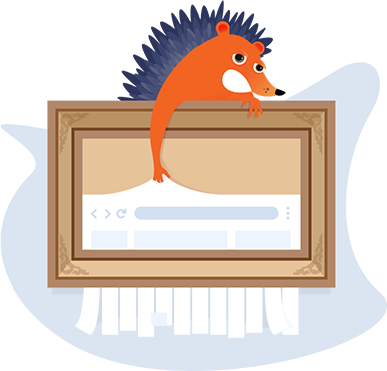
I came to a decision to limit myself to a few colors and keep it very crisp, removing all gradients. The image at the top has to represent the entire article in a simple graphic. This changed everything. No longer am I searching around mindlessly for each post until the right image falls into my browser window. I know each and every time what kind of graphic it should be, I just focus on making it fit the story I am trying to tell. Yes, sometimes it is a challenge, but it’s more of a creative one. I always like the feeling of finalizing the article and the consistency that the posts are beginning to have now through these limitations that I’ve set.

There is a certain feeling of freedom and control that this gives you. Limitations don’t always come as self-imposed. For example, if you are doing user research, you’ll likely create personas based on those findings. Those personas become a limitation in the design. But what is great about this is now you know whom you are designing for. So you can remove that piece from your thinking and focus on making the best design for that type of person.

Give limitations a try, you’ll be surprised with how liberating they are.

More good thoughts: The Demise of Self(ish)-Promotion | Grab the feed
Picture of Mantautas
Mantautas says:

Handcuffs do work, but if they were broken idea could be conveyed better I guess smile

I agree that realizing that limitations actually help, especially in design process, is very important. But there might be another point of view, imagine client giving you very strict “corporate” colours, typefaces which doesn’t fit into design at all, or some weird images to use. Then it would be more distracting than liberating.

Anyway, nice article. One of the best I’ve read in these days.

Posted 04/06 03:22 AM
Picture of Jarvis
Jarvis says:

I have to agree. Limitations are very liberating. For me, to design without constraint is a nightmare and has always ended up being a waste of time. The constraints help one formulate an optimal design solution for the challenge presented.

Posted 04/06 03:28 AM
Picture of Finch
Finch says:

@Mantautas I agree, there are always exceptions. I have worked in a few corporations and their rules are sometimes more than handcuffs. Even if the corporate colors are decent in print, they might be bad for building a user experience. In that case it would not be a good design limitation to me, rather irrational corporate decision making.

@Jarvis You’re right, when there are no constraints/direction on a client side it is a nightmare because they don’t know what they want and you have to guess what is in their head. Bad news.

Posted 04/06 08:26 AM
Picture of Chris
Chris says:

Limitations used to be a hurdle for me too. I think sometimes it can be attitude problem, and that always seems to be followed by shutting down creatively. In reality, design is all about limitations. One of the most useful layout tools is the grid - it limits options to certain extent but the return you get from using it is so much greater.

Posted 04/06 09:26 AM
Picture of Drake
Drake says:

Certain limitations have always been a plus as far as getting an idea rolling. A specified direction and a few certainties makes the entire process flow better for everyone involved. My own site for example, was a pain. Now that I am in the process of redesigning it, I have a much clearer idea of what I’m aiming for. There are things from the initial design that I liked and wanted to keep, there are things that I for sure want to get rid of, and due to my move from agency to freelance, I now have a much clearer purpose for it. All of these things are helping, not limiting.

What I guess I have willingly been blind to in the past is your second paragraph. Just because there are restrictions that I don’t agree with doesn’t mean I can’t still own the project and kick it’s shitty ass into submission. Previously I have often chosen to be bitter towards the client or project lead and not make the best of what I do have. Now, it even kind of makes sense to turn those projects into a case study. “Here are the limitations I was given, and here is what I made of it.” So, for that little bit of insight, thank you.

Posted 04/06 10:20 AM
Picture of Douglas Bonneville
Douglas Bonneville says:

I just got a new typography book “Typeface: Classic Typography for Contemporary Design”. It focuses on 46 fonts - all classics. It shows that with a very limited palette of typefaces, one can design anything.

A famous watercolor artists routinely limits his palette to 3-5 colors. 3 primaries, and then 1 or two kinds of black (Mars Black or Payne’s Gray). His work is exquisite.

Limitations are often freedoms.

Posted 04/06 11:39 PM
Picture of Drew
Drew says:

this guy said it best:

“Limitations are the soil from which creativity grows.”

http://www.alistapart.com/articles/5k/

Posted 04/08 01:08 PM
Picture of colin
colin says:

I just discovered your blog today via an excellent piece at smashing magazine. 

There is some really nice writing on the matter of design here and I look forward to reading through it in totality.

Keep up the great work!

-colin

Posted 04/08 03:03 PM
Picture of Jeremy Nicoll
Jeremy Nicoll says:

I came across this concept when a music teacher talked about how limiting the rules of the Baroque period were. They were quite insane at how restricting they were, but there was still a lot of really good (IMO) music churned out in that time period.

Posted 04/09 04:01 PM
Picture of Marcela
Marcela says:

This is a great post. The paradox of choice is something that always haunts me when i have to make all the design decisions…but setting limitations is a great way to avoid this…thank u for sharing!

Posted 04/09 04:12 PM
Picture of Greg
Greg says:

I’ve always had the same thoughts with regards to poetry. As a former teacher, too often I was faced with students who would complain about the rigidity of the sonnet form, for example, prior to even completing the assignment.

“I have to count syllables? I have to pick from these sonnet patterns? (side note: although there is only so much you can do with rhyme schemes, I gave them the option to invent their own. None ever did in the end) There has to be a change of tone in the last six or the last 2 lines?”

But the assignment was what it was. I wasn’t teaching free-form poetry in that unit, I was teaching sonnet form. So they wrote sonnets.

Almost without fail, students produced their best work during this unit. There seems to be something about the limitation of the form that forced more cylinders to be firing.

(PS, the unit on haiku was also a good one… the unit on free-form and stream-of-consciousness…? Mixed results, though there was always a gem or two)

Posted 04/09 04:26 PM
Picture of Steven Clark
Steven Clark says:

Too true… too much freedom just makes humans flounder wasting energy on thoughts about things that are outside the box. Hands up everybody who has realised half a day or a day went by while you aimlessly sat in front of your workstation testing colour or font… without real purpose? Mmm everybody is guilty of that one… at some point in time.

Nice article… the most critical thing about constraint is the realisation that your job isn’t to fill your own portfolio but to design a business solution for a clients business problem. Making them money is the ultimate constraint… its not enough just to look good.

Posted 04/09 05:45 PM
Picture of Daniel
Daniel says:

Yes, my thoughts exactly. The dreaded empty canvas. I always break out in a sweat when I’m completely free in my design. The theoretically unlimited amount of possibilities makes it just even harder for me. I can work much better if i have some kind of direction.

That’s the main difference between art and design for me. Art is really free, because it’s the artist expressing himself. Design always has a practical purpose.

How good a design is the most admirably designed chair, if you can’t sit on it? smile

Posted 04/24 01:42 PM
Sorry, commenting on this post has expired.